
Ferrari Depreciation Explained: What Impacts Long-Term Desirability
- Ferrari depreciation depends on model rarity, original specification, condition, service history, and timing.
- Limited-production Ferraris, special-series models, and well-documented cars tend to hold long-term desirability more effectively.
- Ferrari Lake Forest can help buyers and sellers evaluate trade value, consignment options, service records, and market positioning.
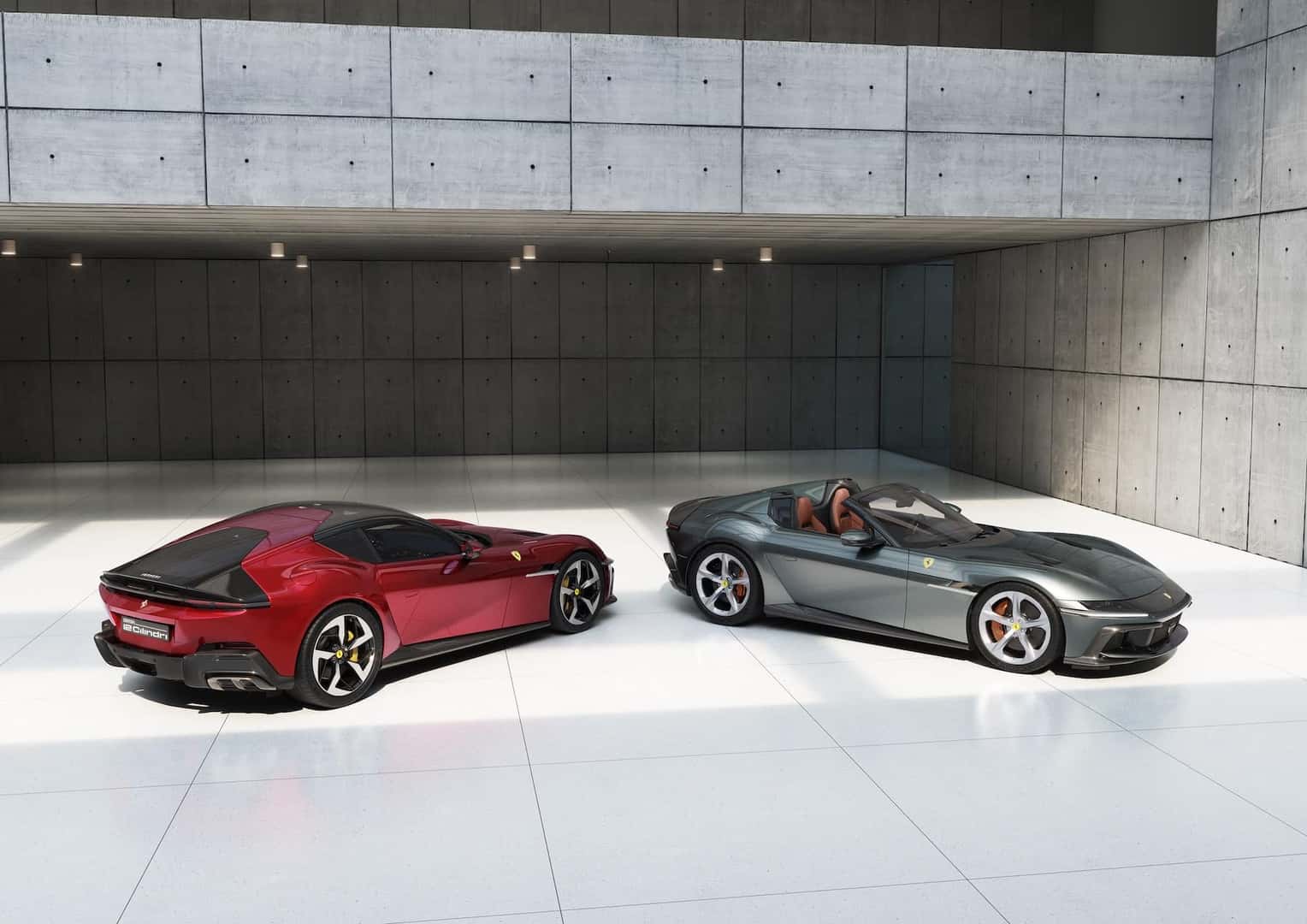
Few conversations in the exotic car world generate more confusion than depreciation. Buyers wonder whether they’re making a smart financial decision, and sellers try to understand why two seemingly similar Ferraris can carry very different values.
The honest answer is that Ferrari depreciation doesn’t follow a single, predictable path. It’s shaped by a layered set of variables, and understanding those variables is what separates informed decisions from costly ones. If you’d like to discuss current availability or get a read on your Ferrari’s trade value, contact us at Ferrari Lake Forest. We’re here to help.
Why Ferrari Depreciation Is More Complicated Than You Think
Most luxury vehicles follow a fairly predictable depreciation curve. Drive them off the lot, and the value drops immediately. Keep them for a few years, and it drops further. Ferrari, though, operates in a different category. Some models lose value in the early years of ownership and then stabilize or recover. Others appreciate steadily from the moment they’re delivered. A select few never depreciate meaningfully at all.
These outcomes rarely come down to luck. They come down to the specific model, its production context, how it was optioned and maintained, and when in the market cycle it changes hands. Ferrari’s controlled production philosophy plays a central role. The brand deliberately limits supply, which means demand consistently outpaces availability for many models. That scarcity is a structural decision, and it protects long-term resale prices in ways that high-volume manufacturers simply can’t replicate.
How Ferrari Compares to Other Exotic Brands Over Time
Put a Ferrari next to a comparable Lamborghini, McLaren, or Aston Martin and track their resale performance over several years. In most cases, the Ferrari holds up better. Across the exotic segment, modern supercars lose approximately 6% of their value after one year and around 20% after three years, though results vary by model and launch timing. Ferrari and Lamborghini generally depreciate less over that three-year window than their German exotic counterparts. Aston Martin and McLaren have depreciated by anywhere from a fifth to a quarter over comparable periods.
These figures reflect measurable market realities, not brand loyalty. Ferrari’s collector base is unusually deep and globally distributed. Demand doesn’t evaporate when a new model arrives because enthusiasm for the brand extends well beyond the latest release. Ferrari also benefits from a consistent design and engineering philosophy, which means older models tend to age more gracefully in both style and mechanical terms.
That said, not every Ferrari outperforms every rival. A model that was overproduced relative to demand, or one that sits awkwardly in the lineup, can underperform expectations. The brand’s overall resilience doesn’t insulate every individual vehicle automatically. The table below illustrates how several key models compare across the factors that most directly influence long-term value.
| Model | Engine/Powertrain | Body Style | Special Series Status | Production Volume | Value Trend |
|---|---|---|---|---|---|
| Ferrari Roma | Turbocharged V8 | 2+2 Coupé | Standard production | Higher volume | Depreciating (early years) |
| SF90 Stradale | Turbocharged V8 hybrid | Coupé / Spider | Flagship, limited Assetto Fiorano variant | Limited | Stable to appreciating |
| F12 Berlinetta | Naturally aspirated V12 | Coupé | Standard production | Moderate | Stable |
| 812 Superfast | Naturally aspirated V12 | Coupé / Spider | 812 Competizione is a limited special series | Standard: moderate; Competizione: very limited | Stable to appreciating (Competizione stronger) |
| F40 | Turbocharged V8 | Berlinetta | Homologation special / collector icon | Approximately 1,311 produced | Appreciating |
The Key Factors That Shape Long-Term Ferrari Desirability
Ferrari resale prices aren’t random. Several well-understood factors consistently influence which cars hold their value and which ones face steeper depreciation.
Production Volume, Rarity, and Allocation
Scarcity is one of the most reliable drivers of desirability. Ferrari models produced in limited numbers carry an inherent advantage in the resale market because supply constraints keep competition among buyers high. Limited-edition variants and special-series vehicles illustrate this clearly. Even within standard production models, allocation plays a role. Cars that were difficult to acquire new tend to command stronger secondary market prices, particularly in the years immediately following their release.
This influences how buyers think about newer models like the SF90 Stradale. SF90 Stradale depreciation has been closely watched given the car’s significant cost at launch. Low-production variants and highly allocated configurations have generally proven more resilient. Models that are more accessible tend to follow a more typical depreciation pattern in the short term before stabilizing.
Color Choices, Options, and Original Specification
The decisions made at the time of original ordering can follow a Ferrari through its entire ownership history. Certain exterior colors retain significantly more buyer interest over time. Classic Ferrari hues such as Rosso Corsa, Giallo Modena, and specific blues consistently attract collectors. Unusual or polarizing colors can work against resale, particularly on models where buyers have strong expectations about presentation.
Beyond color, factory options matter. Features selected through Ferrari’s personalization programs can either improve or complicate a car’s appeal depending on how they align with collector preferences. Carbon fiber packages, Challenge-style equipment, and performance-oriented factory options tend to strengthen desirability. A well-optioned car in a sought-after specification often commands a meaningful premium. An unconventionally specified car can sit on the market longer and sell at a discount, even when the underlying vehicle is excellent.
Provenance, Ownership History, and Documentation
Provenance is the story a car can tell about itself. In the Ferrari market, that story carries real monetary weight. A vehicle with a clean, documented ownership history, original factory papers, and a complete service record commands more confidence from buyers. When a car’s history contains gaps, undocumented repairs, or ownership patterns that raise questions, buyers discount their offers accordingly.
A thorough provenance file typically includes title and registration history, service invoices, factory build records, warranty and maintenance records, ownership succession details, and any accident or repair disclosures. For notable or rare Ferraris, provenance takes on additional significance. Even for more common road models, complete documentation reassures buyers that the car has been cared for properly, often the deciding factor when comparing two otherwise similar examples.
We encourage clients browsing our pre-owned Ferrari selection to request full documentation packages before committing. Transparency at this stage protects both buyers and sellers.
The Role of Mileage and Physical Condition
Mileage is perhaps the most visible variable in any resale evaluation, but it’s rarely the whole story. A Ferrari with 20,000 miles maintained to a high standard is often more appealing than one with 5,000 miles showing signs of poor storage or neglect. Buyers in this market are sophisticated enough to look beyond odometer readings and assess overall condition properly.
Paint quality, interior wear, the condition of rubber and gaskets, and mechanical integrity all factor into what a Ferrari is genuinely worth. Cars that have been stored properly, driven thoughtfully, and presented in excellent condition consistently outperform their mileage peers. Physical condition also connects to perceived ownership quality. Buyers interpret a well-kept Ferrari as evidence that its previous owner valued it correctly, and that signal has real pricing power.
Service History, Authorized Maintenance, and Buyer Confidence
A complete, authorized service history is one of the most direct ways to protect a Ferrari’s long-term value. Buyers know that Ferrari vehicles require specific expertise and genuine parts to maintain both performance and longevity. When a car’s service records show consistent work performed by a Factory Authorized dealer, it removes a significant layer of uncertainty from the transaction.
As a Factory Authorized Dealer since 1981, we at Ferrari Lake Forest provide factory-approved service performed by official Ferrari technicians, creating a documented chain of care that future buyers can trust. Cars that lack authorized service records often face skepticism, even when the owner is confident in the work performed. Undocumented history creates risk, and buyers price that risk into their offers. Our service department is available to current and prospective owners throughout the Chicagoland area.
Market Demand, Model Cycles, and the Importance of Timing
Ferrari values respond to model cycles, collector trends, and broader economic conditions. Understanding where a particular model sits in its lifecycle can significantly influence both the price you pay and the price you eventually receive.
When a new model launches, its predecessor often experiences short-term depreciation as attention shifts. That dip can represent a buying opportunity for buyers who recognize that the car’s underlying quality hasn’t changed. Ferrari Roma depreciation, for example, attracted attention following the SF90’s rise, even though the Roma‘s blend of grand touring refinement and V8 performance gives it a strong following in its own right.
Models that have passed through their initial depreciation phase and settled into a stable range can represent particularly strong value. They’re past the period of sharpest decline but haven’t yet reached the appreciation trajectory that comes with age and scarcity. Timing an entry into this window requires market knowledge and consistently produces better long-term outcomes.
Questions about the Ferrari F80 have also circulated recently, with some reports pointing to F80 depreciation tied to its pricing and positioning. Ultra-exclusive hypercars carry unique market conditions driven by a smaller, more concentrated buyer pool. They can perform exceptionally well, but the stakes of specification and timing are proportionally higher.
What Serious Buyers and Sellers Should Evaluate Before Acting
Before purchasing or listing a Ferrari, a thorough evaluation is worth the effort. For both buyers and sellers, the following checklist covers the most important areas:
-
Has the car been inspected by an authorized Ferrari technician, with a current mechanical assessment on file?
-
Are all service intervals documented through a Factory Authorized dealer?
-
Is the provenance file complete, including factory build records, original manuals, window sticker, and order sheets?
-
Is the title history clean, with a clear succession of owners and no undisclosed incidents?
-
Does the color, option content, and build align with collector expectations for this model?
-
How does this car’s mileage, condition, and spec compare to current comparable listings?
-
Where does this model sit in its depreciation or appreciation trajectory, and does that timing work in your favor?
Sellers benefit from assembling this documentation thoroughly before listing. Cars presented with complete provenance sell faster and typically at stronger prices. For buyers, a car priced below market in this segment often reflects undisclosed issues rather than a genuine opportunity.
Connect With Ferrari Lake Forest About Trade, Consignment, or Availability
Whether you’re evaluating a trade appraisal, exploring consignment options, or searching for a specific model, our team brings decades of expertise to every conversation. Operating from a 70,000 square foot facility in Lake Bluff, Illinois, we serve clients throughout the Chicagoland area and work with buyers and sellers nationwide, including transportation services for remote transactions. Collectors also have access to heated, monitored storage for vehicles not in active use.
If you’re thinking about a Ferrari purchase, sale, or consignment, reach out to Ferrari Lake Forest directly to discuss what you’re looking for and how we can help.
Frequently Asked Questions
Do Ferraris depreciate like other luxury cars?
Ferrari depreciation is less predictable than depreciation for most luxury vehicles. Model rarity, production volume, condition, mileage, service history, specification, and market timing all influence whether a Ferrari declines, stabilizes, or appreciates.
What helps a Ferrari hold its value?
Limited production, desirable colors, strong factory options, complete documentation, authorized service history, low or appropriate mileage, and excellent physical condition can all improve long-term desirability.
Why does authorized Ferrari service history matter?
Authorized service records show that the car has been maintained by trained Ferrari technicians using proper procedures and parts. This reduces uncertainty for future buyers and can strengthen resale confidence.
Can Ferrari Lake Forest help with trade value or consignment?
Yes. Ferrari Lake Forest can assist with trade appraisal, consignment conversations, documentation review, and availability questions for buyers and sellers in Chicagoland and nationwide.
0 comment(s) so far on Ferrari Depreciation Explained: What Impacts Long-Term Desirability