
Ferrari Carbon-Ceramic Brake Wear and Care Guide
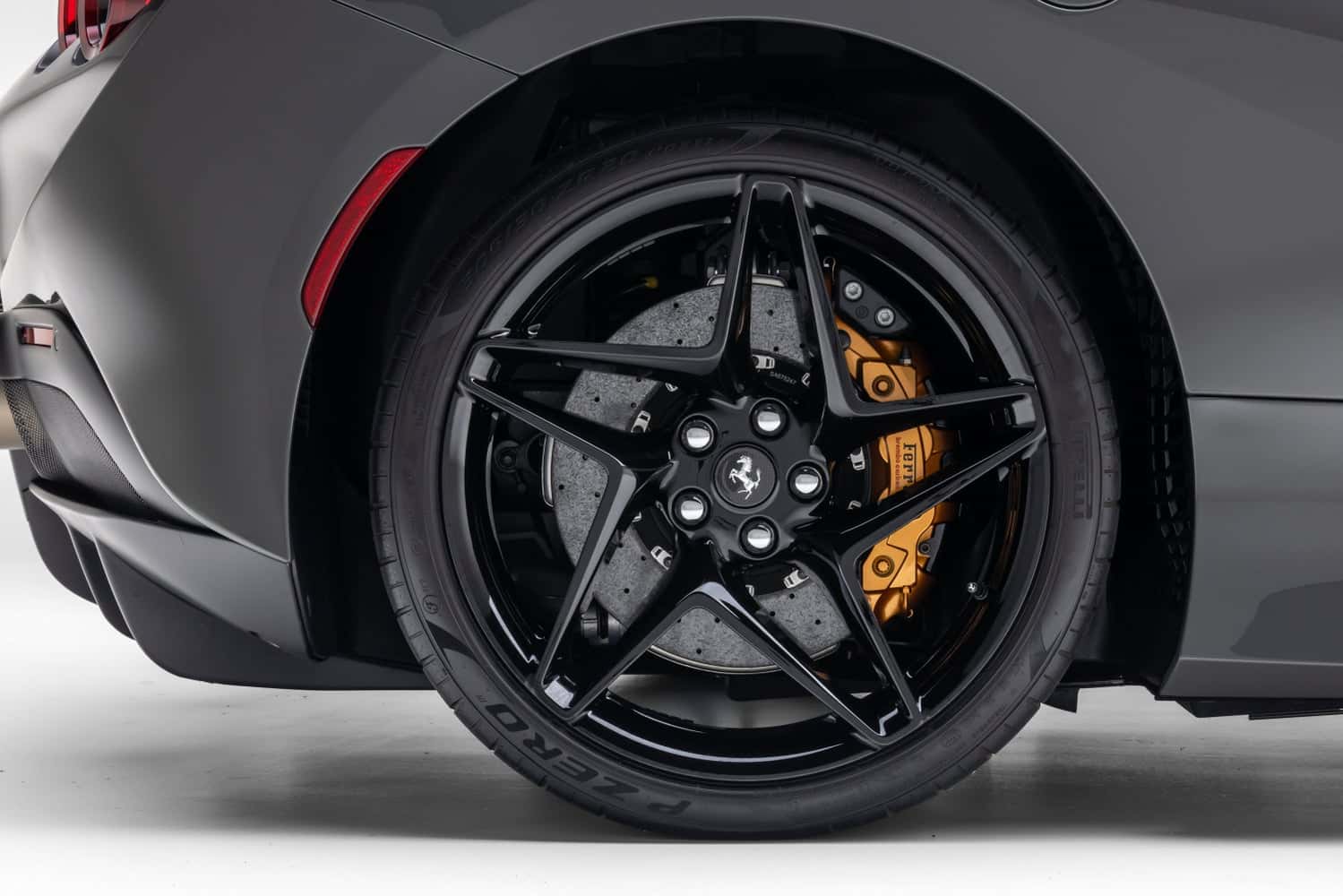
A squeal after a rainy drive. Or maybe you run a finger over a cool rotor and feel a slightly rough texture you weren’t expecting. Every Ferrari owner notices these things eventually, and most of the time they mean nothing at all. Knowing the difference between normal characteristics of Ferrari carbon ceramic brakes and genuine warning signs protects both your safety and your investment. If you’re due for a look, you can schedule service with our factory-trained team.
This guide breaks down how Carbon Ceramic Material (CCM) technology works, how it wears differently than iron, and what to watch for between visits, along with the driving and cleaning habits that actually extend rotor life.
Why Ferrari Relies on Carbon Ceramic Brakes
Ferrari brakes built from carbon ceramic material weren’t an overnight decision. CCM discs debuted on the Enzo in 2002, developed jointly with Brembo, whose CCM program launched back in 1998. By 2008, carbon ceramic disc brakes had become standard equipment across every current Ferrari model. Two decades of real-world refinement sit behind this system, which is a big part of why it’s held up so well.
How Carbon Ceramic Discs Differ from Iron Rotors
The core difference is material. Iron rotors are cast metal that heats up, cools down, and eventually rusts, especially in humid or salty climates like ours here in Lake Bluff, IL. CCM discs are a carbon fiber and silicon carbide composite that resists corrosion entirely and tolerates far higher operating temperatures before performance drops off. Ferrari frames this primarily as a durability and feel upgrade rather than a simple weight reduction, though the weight savings are substantial in their own right.
Performance Benefits: Fade Resistance, Weight Savings, and Longevity
Because CCM operates safely at much higher temperatures than cast iron, it resists the fade that comes from repeated hard stops, whether on a track day or a mountain pass. It also cuts unsprung mass significantly, sharpening steering response and improving how the suspension reacts to inputs. Ceramic rotors keep a slightly textured surface rather than developing the mirror finish typical of iron rotors, and that texture is completely normal.
How Ferrari Carbon Ceramic Brakes Wear Over Time
Carbon ceramic rotors don’t wear the same way iron ones do, and a lot of the usual assumptions simply don’t apply.
Normal Wear Patterns vs. Iron Brake Wear
Iron brakes lose thickness evenly as they wear, so a caliper measurement tells you almost everything. CCM wears differently: the disc face loses small amounts of mass over time, while overall thickness stays largely unchanged. Measuring thickness alone won’t tell you how much life is left in a carbon ceramic rotor. The only definitive check is weighing the disc and bell against the stamped minimum weight, which requires shop equipment. Ferrari’s instrument cluster also estimates wear based on the number and intensity of brake applications, giving drivers a rough real-time gauge between inspections.
| Feature | Carbon Ceramic Brakes | Iron Brakes |
|---|---|---|
| Material Composition | Carbon fiber reinforced with silicon carbide (SiC) | Cast iron |
| Weight | Significantly lighter | Heavier |
| Fade Resistance | High, even under repeated hard stops | Lower, prone to fade under sustained heat |
| Typical Lifespan | Longer under normal use | Shorter, more frequent replacement |
| Wear Indicators | Mass loss, pitting, chips, delamination | Thickness reduction, scoring, rust |
| Relative Replacement Cost | Significantly more expensive due to material and labor | Lower cost |
What Causes Premature Wear or Damage
The single biggest cause of catastrophic CCM damage is using brake pads not designed for the material. Standard metallic pads grind against the SiC layer instead of working with it, and the damage isn’t gradual, it’s fast and severe. Aggressive, last-second braking and repeated track heat also shorten lifespan considerably. Because these rotors are hard but brittle, a dropped wheel during tire changes or an accidental strike can chip the edges, which is why our technicians handle them with gloves.
Overheating beyond the material’s threshold oxidizes the carbon and creates a pitted surface, and that pitted texture then grinds through brake pads faster than a healthy rotor would. Washing a hot rotor with cold water causes thermal shock, another avoidable cause of stress cracking.
Signs Your Ferrari Carbon Ceramic Brakes Need Attention
Some marks on a rotor are purely cosmetic; others point to real trouble. Knowing which is which saves unnecessary worry and catches real problems early. If something feels off, schedule a service appointment rather than waiting.
Visual Wear Indicators and Surface Cracking
Fine surface crazing and a slightly rough, textured finish are completely normal for Ferrari brake discs and don’t indicate failure. What’s concerning is a rough or pitted surface, or delamination, where the SiC layer erodes and exposes the carbon fiber underneath. Any chip is considered structurally compromising, no matter how small. Cracks that catch a fingernail, form connected networks, or radiate outward from the center mounting bell toward the braking surface point to a critical failure and need immediate professional evaluation.
One notable differentiator: Ferrari’s CCM discs don’t typically develop the same hairline cracking patterns seen on some other manufacturers’ carbon ceramic rotors, a result of the Ferrari and Brembo engineering partnership.
Warning Sounds, Vibration, and Pedal Feel Changes
A squeal on the first brake application after washing your car, driving through rain, or pulling out of a parking spot is normal. It’s caused by a thin moisture film on the rotor surface, and it fades once the disc warms up. What’s not normal is harsh grinding or metallic contact, vibration under braking, longer stopping distances, or a pedal that suddenly feels softer or requires more travel.
That last symptom in particular points to an actual mechanical issue rather than a sensor glitch. Ferrari’s pad wear sensors use an embedded wire that contacts the disc as the pad material wears thin, which triggers a dashboard warning. Don’t ignore that light.
Everyday Care and Driving Habits That Protect Brake Life
Good habits behind the wheel and in the garage make a measurable difference in how long your Ferrari brakes last.
Proper Bedding-In and Break-In Procedures
New pads and discs need a proper bedding-in process, or performance won’t reach its full potential. A typical sequence involves roughly 20 normal stops from around 30 mph (50 kph) using light pedal pressure, gradually progressing to medium-intensity stops. This is followed by a controlled cool-down, driving at around 50 mph without braking for about 15 minutes to bring rotor temperature below 100°C. The goal is a uniform friction transfer layer and full contact between pad and rotor. Done correctly, the surface should look smooth and consistent with a metallic shine, with no defects or micro-fractures visible.
Driving Habits That Extend Brake Life
Smooth, anticipatory driving is the single biggest factor in extending the life of carbon ceramic rotors. Brake early, lean on engine braking when you can, and give yourself enough following distance that you’re not stabbing the pedal at the last second. When it comes to washing, use only pH-neutral soap. Acidic wheel cleaners can attack and degrade the rotor material, and a faded or discolored aluminum bell is a telltale sign of chemical damage.
Avoid petroleum-based brake cleaners too, since CCM can absorb those chemicals and suffer damage once the rotor heats up again. Dry with microfiber cloths, and only clean the brakes once they’ve cooled. One real advantage for owners here in Chicagoland: CCM doesn’t rust, which cuts down meaningfully on long-term upkeep through our humid summers and salted winter roads.
Inspecting and Measuring Carbon Ceramic Rotor Wear
Between professional visits, there’s a lot an owner can check with just their hands and eyes.
DIY Visual Checks Owners Can Perform
A few minutes of inspection every few thousand miles, or before a track event, can catch issues early.
-
Run your fingers over a cool rotor and confirm it feels glass-smooth, without a gritty or pitted texture.
-
Inspect the inner and outer edges for chips, which are commonly caused by a dropped wheel during tire changes.
-
Look at the aluminum bell for any discoloration, which can signal chemical damage from harsh cleaners.
-
Check for uneven pad wear across the rotor surface, which can point to alignment or caliper issues.
When to Schedule a Professional Brake Inspection
DIY checks are a good habit, but they can’t replace proper measurement. Professional inspection is essential before track events, after any collision or parking incident, and any time you want a precise read on remaining life. That means micrometer or vernier readings at multiple points compared against minimum spec, with weight-based verification against the stamped minimum weight as the definitive method, something that requires shop equipment most owners simply don’t have at home.
If you’ve picked up a pre-owned Ferrari, it’s also worth confirming the rotor’s stamped minimum weight to understand any inherited wear from the previous owner.
Why Professional Service Matters for Carbon Ceramic Brakes
Unlike iron rotors, which can be resurfaced on a lathe, CCM rotors cannot be machined or resurfaced under any circumstance. Doing so permanently removes the engineered SiC coating and creates an unsafe braking surface. Standard metallic brake pads must never be used on these systems either.
Beyond the discs themselves, Ferrari’s CCM setup is calibrated as an integrated system: ABS, stability control, brake bias, pedal travel, and cut-in points are all tuned together at the factory. That’s precisely why our factory-authorized service department matters. Our technicians have access to Ferrari software updates, factory technical bulletins, and genuine OEM parts that generic service simply can’t offer.
Schedule Your Ferrari Brake Inspection with Ferrari Lake Forest
Understanding how these brakes wear, and staying ahead of that wear with proper inspection, is what keeps owners out of trouble. Our team has served Chicagoland Ferrari owners since 1981, and our factory-trained technicians earned the Ferrari Service Award at the 2024 Top Dealer Awards for the quality of work we deliver. Every client also gets a dedicated service advisor who knows their car’s history.
If you have questions about your brakes, reach out through our contact page, or go ahead and schedule your brake inspection today.
0 comment(s) so far on Ferrari Carbon-Ceramic Brake Wear and Care Guide