
What to Expect for the Fully-Electric Ferrari Luce
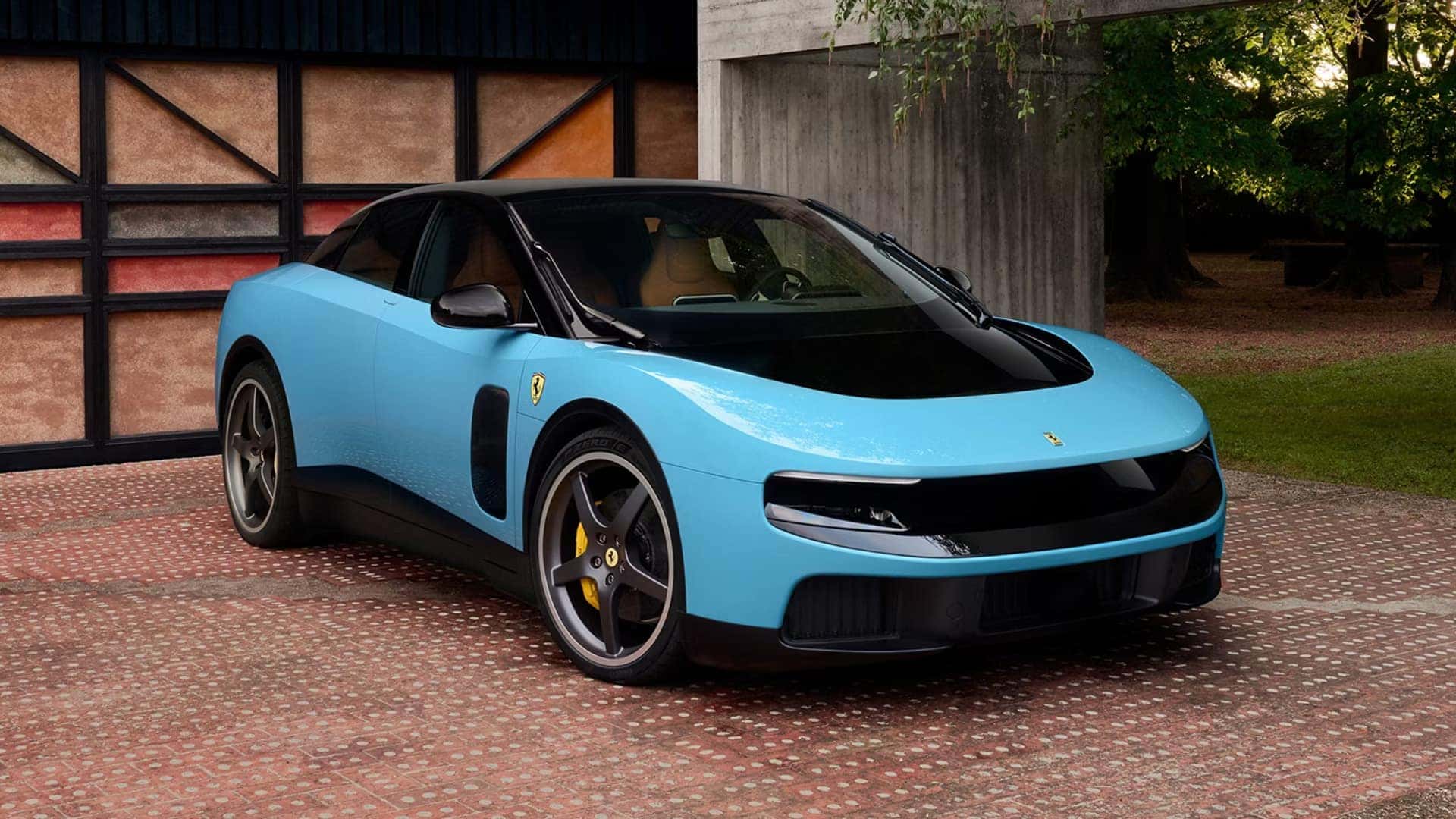
The Ferrari Luce opens a new chapter in the history of the Prancing Horse. It is Ferrari’s first fully electric production model, but its importance goes beyond the absence of an internal-combustion engine. The Luce introduces a dedicated electric platform, four-motor all-wheel drive, a new design language, and seating for five within one of the most spacious vehicles Ferrari has created.
Developed and built in Maranello, the Luce shows how Ferrari intends to use electric power on its own terms. Its four motors produce more than 1,000 horsepower, while active suspension, four-wheel steering, and individual wheel control give the chassis the technology needed to manage that output. For Ferrari enthusiasts around Chicago, the Luce provides an early look at how the brand’s performance principles are carrying into the electric era.
Ferrari Luce Key Specifications
| Specification | Ferrari Luce |
|---|---|
| Powertrain | Four electric motors |
| Drivetrain | All-wheel drive |
| Maximum Output | 1,050 cv, approximately 1,035 hp |
| Battery Capacity | 122 kWh |
| Estimated Range | Up to approximately 330 miles |
| 0–62 MPH | Approximately 2.5 seconds |
| Top Speed | Approximately 193 mph |
| Maximum DC Charging Rate | Up to 350 kW |
| Seating | Five |
| Doors | Four |
These figures are based on Ferrari’s initial specifications and may vary by market or final production configuration.
A New Type of Ferrari
Rather than fitting an electric powertrain into an existing model, Ferrari created a dedicated architecture for the Luce. The result is a four-door, five-seat vehicle measuring more than five meters in length, yet it avoids following the proportions of a conventional luxury sedan or SUV. Its body combines the low visual weight of a grand tourer with the cabin space and access expected from a larger four-door model.
The name “Luce” means “light” in Italian, a fitting choice for a vehicle built around electricity, clarity, and a new design direction. It also reflects Ferrari’s intention to make the model feel distinct from its internal-combustion and plug-in hybrid vehicles. The Luce is not positioned as an electric version of the Purosangue or another current Ferrari. It begins its own line within the range.
Exterior Design Developed With LoveFrom
Ferrari worked with LoveFrom, the creative collective founded by Sir Jony Ive and Marc Newson, on the Luce’s exterior and cabin. The collaboration produced a shape that looks deliberately different from recent Ferrari berlinettas. Smooth surfaces, a relatively clean front end, and a shell-like upper body reduce visual clutter while helping the car move efficiently through the air.
The Luce’s profile places the passenger compartment farther forward than a front-engine Ferrari would allow. A long roofline creates room for the second row without turning the body into a traditional three-box sedan. Large wheels and pronounced rear haunches preserve a strong stance, while short overhangs help keep the proportions athletic despite the car’s overall size.
Much of the design is driven by the electric platform underneath it. Without a combustion engine occupying the nose, Ferrari could rethink the relationship between the wheels, cabin, and body. The result does not try to recreate the silhouette of a V8 or V12 model. It uses the packaging freedom of electric propulsion to form a new Ferrari shape.
Four Motors and More Than 1,000 Horsepower
The Ferrari Luce uses four electric motors, with one powering each wheel. Together, they produce 1,050 metric horsepower, or approximately 1,035 mechanical horsepower. Ferrari estimates that the Luce can accelerate from zero to 62 mph in about 2.5 seconds and reach a top speed of approximately 193 mph.
Independent control of all four motors gives the vehicle more precise ways to distribute power than a conventional all-wheel-drive system. Torque can be adjusted at each wheel based on steering input, available grip, vehicle speed, and the selected drive setting. This allows the system to support acceleration in a straight line while also influencing balance and response through a corner.
The rear motors provide most of the power, helping retain the rear-biased character associated with Ferrari. The front motors can disconnect while cruising when their output is not needed, reducing energy consumption and mechanical drag. Drivers will also be able to adjust how the powertrain responds, allowing the Luce to change its character for different roads and conditions.
Active Suspension and Four-Wheel Steering
Electric performance at this level requires more than powerful motors. The Luce uses the third generation of Ferrari’s 48-volt active suspension technology, an evolution of the system introduced on the Purosangue and further developed for the F80. Electric actuators can manage each wheel independently, helping control body movement without relying on traditional anti-roll bars.
The system is designed to separate ride comfort from body control. It can absorb uneven pavement while keeping the vehicle composed under acceleration, braking, and cornering. Four-wheel steering works alongside the active suspension and torque-vectoring system to make the Luce more responsive at lower speeds and more stable during high-speed driving.
These technologies are particularly important because the 122-kWh battery adds considerable mass. Ferrari has positioned the battery low within the dedicated platform to create a low center of gravity. The Luce also has a rear-biased weight distribution, supporting the handling balance Ferrari wanted rather than placing equal weight over both axles.
What Does an Electric Ferrari Sound Like?
Ferrari did not attempt to reproduce the sound of a V8 or V12 engine through speakers. Instead, the Luce uses a system that captures real mechanical vibrations produced by the rear electric motors. Those vibrations are amplified and transmitted into the cabin, creating sound that changes naturally with motor speed and power demand.
This approach gives the Luce an audible connection to its powertrain without adding a simulated combustion soundtrack. The frequency and intensity rise as the motors work harder, giving the driver another way to interpret acceleration and vehicle load. It is an electric sound created by the car’s own mechanical activity, not a recording layered over it.
Battery Range and Charging
The Luce is equipped with a 122-kWh battery pack using cells integrated into modules developed by Ferrari. The company estimates a fully charged range of approximately 530 kilometers, or about 330 miles, under the applicable European testing cycle. Official U.S. EPA range figures have not yet been announced, so the final North American estimate may differ.
An 880-volt electrical architecture allows the Luce to accept DC fast-charging rates of up to 350 kW under suitable conditions. The high-voltage system also helps reduce current and heat during demanding driving. Regenerative braking can return energy to the battery while slowing the car, with the driver able to influence the level of regeneration.
Ferrari developed major parts of the electric system in-house, including the motors, inverters, battery integration, and control software. Battery cells are supplied by a specialist manufacturer, but the pack is assembled in Maranello. The Luce will also be produced in Ferrari’s e-building, which was created to support internal-combustion, hybrid, and fully electric vehicle production.
A Four-Door Ferrari With Five Seats
The Luce is the first production Ferrari designed to seat five people. Its four-door configuration and long cabin give it a different purpose from the two-seat and 2+ models that make up much of the Ferrari model range. It also expands on the practical direction established by the four-seat Purosangue.
Passenger space is complemented by a rear cargo area and additional storage beneath the front bodywork. Ferrari has reported approximately 597 liters of rear luggage capacity, although final U.S. cargo measurements may be presented differently. The added room makes the Luce suitable for longer trips and regular use without framing it as a conventional utility vehicle.
A Tactile, Driver-Focused Interior
The Luce cabin mixes digital displays with physical controls. The steering wheel uses tactile switches, rollers, and a physical start control, allowing frequently used functions to be operated without moving through multiple on-screen menus. A central display handles navigation, media, charging information, and other vehicle settings, while a separate screen gives the front passenger access to selected functions.
Materials were chosen to emphasize their natural appearance and texture. Aluminum, glass, leather, and woven fabrics are used throughout the cabin, with many components designed specifically for the Luce. A glass transmission selector provides a visual connection to Ferrari’s traditional gated manual shifters while operating the electric drivetrain.
The interior is modern, but it does not treat a large touchscreen as the centerpiece of every interaction. The combination of clear displays and mechanical controls is meant to keep the driver connected to the vehicle. It also gives the Luce a cabin identity that is distinct from other high-performance electric cars.
How the Luce Fits Into Ferrari’s Electrified History
The Luce may be Ferrari’s first fully electric production vehicle, but electric power has played a role in the brand’s road cars for years. LaFerrari used an electric motor to support its V12 engine, while the SF90 Stradale brought plug-in hybrid technology and all-wheel drive to a series-production Ferrari. The 296 GTB and 296 GTS further demonstrated how an electric motor could sharpen response and add performance to a smaller-displacement engine.
The Luce takes the next step by removing the combustion engine entirely. That change gives Ferrari new control over torque delivery, chassis balance, packaging, and sound. At the same time, the company continues to develop internal-combustion and hybrid vehicles. The Luce broadens Ferrari’s engineering portfolio rather than replacing every other type of powertrain in the range.
When Will the Ferrari Luce Be Available?
Ferrari has indicated that the first Luce deliveries are expected to begin in late 2026, although timing will vary by region and individual allocation. Final U.S. pricing and market-specific equipment have not been confirmed. Production will take place at Ferrari’s e-building in Maranello alongside the company’s other powertrain formats.
Interest is likely to be strong because of the Luce’s place in Ferrari history and its combination of performance with five-passenger capacity. Drivers who want updates about the Luce, future availability, or other upcoming Ferrari models can contact Ferrari Lake Forest. Our team can also help buyers review the current Ferrari inventory or consider one of the rare models available through our pre-owned inventory.
Ferrari Luce Frequently Asked Questions
Is the Ferrari Luce fully electric?
Yes. The Ferrari Luce is Ferrari’s first fully electric production model. It uses four electric motors and a 122-kWh battery rather than an internal-combustion engine.
How much horsepower does the Ferrari Luce have?
The four-motor powertrain produces 1,050 cv, equal to approximately 1,035 mechanical horsepower. Ferrari estimates a zero-to-62-mph time of about 2.5 seconds.
What is the estimated range of the Ferrari Luce?
Ferrari estimates that the Luce can travel approximately 530 kilometers, or about 330 miles, on a full charge under European testing. An official EPA range estimate for the United States has not yet been released.
How many people can the Ferrari Luce seat?
The Ferrari Luce has four doors and seating for five people. It is the first production Ferrari developed with a five-seat cabin.
When will Ferrari Luce deliveries begin?
Initial deliveries are expected to begin in late 2026. U.S. availability, allocation details, pricing, and final equipment may be announced closer to its North American arrival.
0 comment(s) so far on What to Expect for the Fully-Electric Ferrari Luce