
Ferrari 0-60 Times: A Comprehensive Guide
- Ferrari’s current manufacturer-claimed acceleration figures in this guide range from 2.15 seconds to about 3.3 seconds.
- Hybrid models like the F80, SF90, and 296 use electric torque fill to sharpen low-speed launch performance.
- The 12Cilindri shows Ferrari can still deliver sub-three-second drama with a naturally aspirated V12.
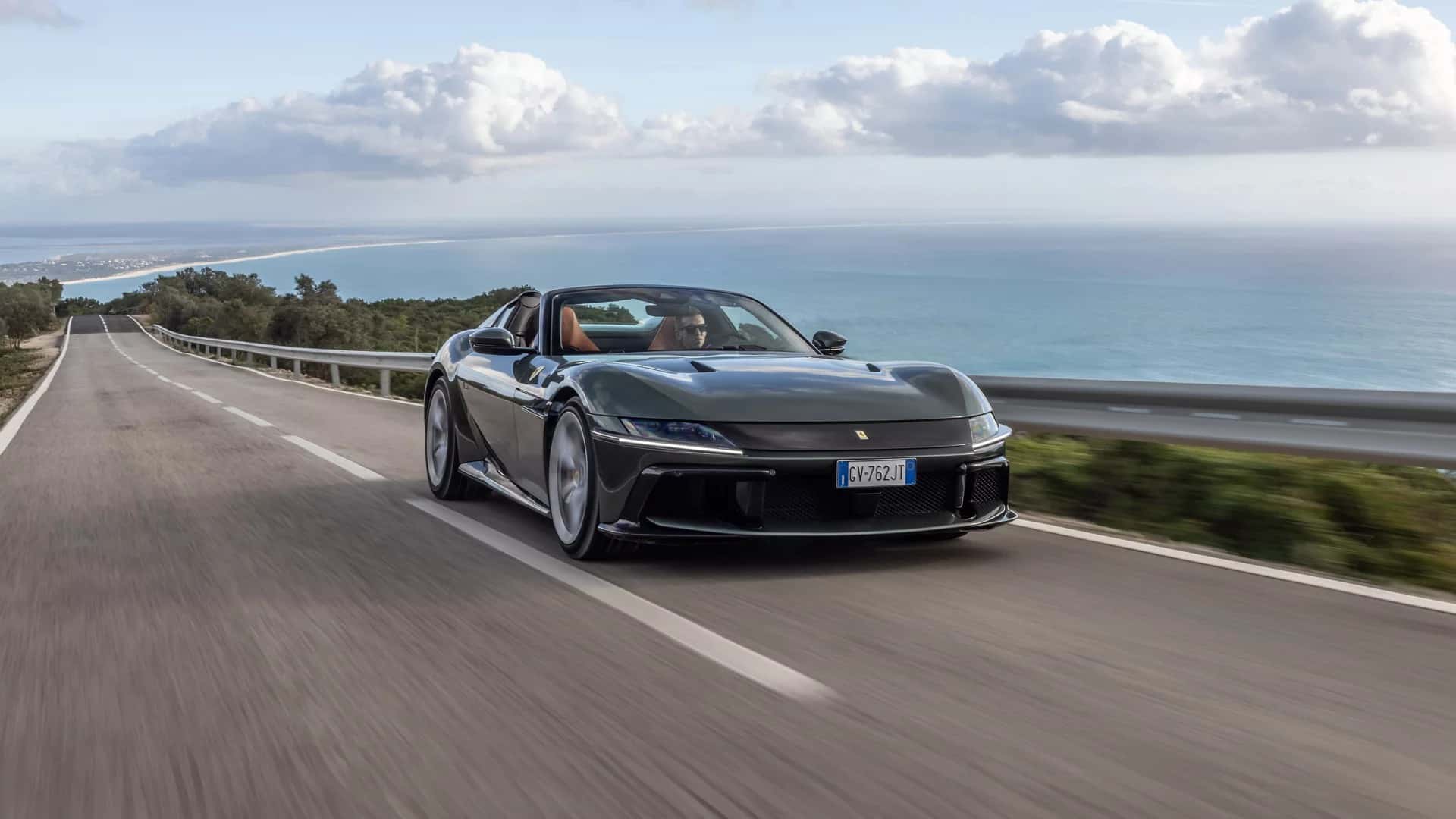
Few numbers in the automotive world carry as much weight as a Ferrari’s 0-60 time. It’s a figure enthusiasts memorize, debaters cite, and engineers obsess over. But beyond the bragging rights, these numbers tell a deeper story about how Ferrari thinks about performance, engineering, and what a driver should feel the instant they press the accelerator.
Whether you’re comparing the fastest models or simply trying to understand how quick a Ferrari really is, we’ve put together this guide to break down the current lineup and what makes each model’s acceleration character uniquely its own.
What Ferrari 0-60 Times Actually Tell You
A 0-60 mph figure is a snapshot. It captures the precise moment a car transitions from standing still to highway speed, and in that brief window, it reveals an enormous amount about the engineering underneath. For Ferrari, these numbers reflect powertrain sophistication, aerodynamic efficiency, weight management, and traction control calibration all working in concert.
What the number doesn’t tell you is equally important. Ferrari’s acceleration figures are measured under controlled conditions by professional drivers on closed courses, using specialized timing equipment built to eliminate variables like weather and surface grip. The result is a consistent, comparable figure that represents only a fraction of what the car can actually do. Handling, braking feel, steering response, and the emotional charge that comes with every rev tell the rest of the story.
That said, 0-60 times do serve as a credible benchmark. They let buyers and enthusiasts place each model within the performance spectrum and understand what separates a grand tourer from a track-focused hypercar. Ferrari’s current lineup spans a remarkable range, from practical four-seaters to sub-three-second hypercars, and the 0-60 figure is your first useful tool for understanding where each car fits.
If you’d like to explore which models are currently available, browse our pre-owned Ferrari inventory or contact Ferrari Lake Forest to discuss what’s in our showroom.
Current Ferrari 0-60 Times: Quick Reference Guide
Ferrari’s modern lineup consistently delivers manufacturer-claimed acceleration figures that put most performance cars to shame. The table below draws from Ferrari’s official published data. All figures are manufacturer-claimed and have not been independently verified by Ferrari Lake Forest.
| Model | Engine/Powertrain | Horsepower | 0-60 Time | Figure Type |
|---|---|---|---|---|
| Ferrari F80 | 3.0L twin-turbo V6 + 3 electric motors | 1,200 PS combined | 2.15 sec (0-62 mph) | Manufacturer-claimed |
| Ferrari SF90 Stradale | Twin-turbo V8 + 3 electric motors | 1,000 PS combined | 2.5 sec (0-62 mph) | Manufacturer-claimed |
| Ferrari SF90 Spider | Twin-turbo V8 + 3 electric motors (PHEV) | 1,000 PS combined | 2.5 sec (0-60 mph) | Manufacturer-claimed |
| Ferrari 12Cilindri Coupe | 6.5L naturally aspirated V12 (F140) | 830 PS / 819 hp | 2.9 sec (0-62 mph) | Manufacturer-claimed |
| Ferrari 12Cilindri Spider | 6.5L naturally aspirated V12 (F140) | 830 PS / 819 hp | 2.95 sec (0-62 mph) | Manufacturer-claimed |
| Ferrari 296 GTB | 3.0L twin-turbo V6 + electric motor | 654 hp + 165 hp electric | 2.9 sec (0-60 mph) | Manufacturer-claimed |
| Ferrari 296 GTS | 3.0L twin-turbo V6 + electric motor | 654 hp + 165 hp electric | 2.9 sec (0-62 mph) | Manufacturer-claimed |
| Ferrari Purosangue | Naturally aspirated V12 + AWD | ~728 hp | ~3.3 sec (0-60 mph) | Manufacturer-claimed |
Inside Each Model’s Performance Character
The 0-60 figure for any Ferrari doesn’t exist in isolation. It’s the product of specific engineering decisions, each one telling you something meaningful about the car’s purpose and personality.
Ferrari F80: The Hypercar Apex
The Ferrari F80 claims a manufacturer-stated 2.15 seconds from zero to 62 mph, placing it among the fastest production cars ever built and making it the direct successor to the LaFerrari. That figure comes from a 3.0-liter twin-turbo V6 producing 900 PS in combustion form, supplemented by electric motors adding 300 PS, for a combined output of 1,200 PS. The three-motor hybrid system is the key to the number: electric torque fills in instantaneously at launch, eliminating the lag that limits purely combustion-driven acceleration at low speeds.
The F80 also generates 1,050 kg of downforce at speed and hits a top speed of 217 mph, per Ferrari’s manufacturer claims. The acceleration character feels almost violently linear as a result. The car loads up and drives forward without hesitation from the moment the throttle opens. This is a limited-production hypercar operating at the absolute boundary of what Ferrari’s engineers currently consider achievable.
Ferrari SF90 Stradale and SF90 Spider: Hybrid Hypercar Pace
Named to mark Scuderia Ferrari’s 90th anniversary, the SF90 Stradale delivers a manufacturer-claimed 0-62 mph time of 2.5 seconds. The SF90 Spider, Ferrari’s first open-top PHEV, matches that figure exactly, also clocking 2.5 seconds to 62 mph. Both figures come from pairing a twin-turbocharged V8 with three electric motors producing a combined 1,000 PS, with the V8’s peak torque rated at 800 N·m (590 lb-ft) at 6,000 rpm.
The electric motors are really the mechanism behind the launch. At low revs, where the turbocharged V8 is still building boost, they deliver immediate torque fill across both axles. The combustion engine then takes over through the rev range with no noticeable handoff. The Spider’s retractable hardtop does add some weight over the Stradale, but Ferrari’s engineering keeps both cars at identical performance figures, preserving the full experience of the coupe in open-top form.
Ferrari 12Cilindri Coupe and Spider: Pure-Engine Drama
The 12Cilindri takes a deliberately different path. Where the SF90 uses electrification to supplement torque, the 12Cilindri trusts entirely in a naturally aspirated 6.5-liter V12, the F140 engine, producing 819 hp at a screaming 9,250 rpm. Ferrari claims 0-62 mph in 2.9 seconds for the Coupe and 2.95 seconds for the Spider, with peak torque of 678 N·m (500 lb-ft) arriving at 7,250 rpm. Ferrari also claims 0-124 mph in 7.9 seconds for the Coupe, a figure that speaks to the engine’s sustained output through the rev range.
The acceleration character is fundamentally different from any hybrid model. Power builds linearly as revs climb, and the surge through the upper rev range, where the V12 is fully on song, produces an intensity no electric torque fill can replicate. The Spider adds nothing to the number but everything to the experience, opening the car to a V12 engine note at full cry that represents one of the most distinctive sounds in production automotive history.
Ferrari 296 GTB and 296 GTS: Mid-Engine Precision
The 296 GTB and 296 GTS share a manufacturer-claimed 0-60 time of 2.9 seconds, produced by a 3.0-liter twin-turbo V6 generating 654 hp paired with an electric motor adding 165 hp. Worth noting: the 296 GTB is Ferrari’s first stock 6-cylinder production car since the Dino 206 GT and 246 GT/GTS models. The mid-engine layout is central to both the acceleration figure and the handling balance that makes the car feel so composed at the limit.
The electric motor handles low-speed torque fill while the twin-turbo V6 delivers power through the rev range, producing a driving character that feels surgically precise rather than dramatic. For the GTS, the Retractable Hard Top stows completely at lower speeds, and the open configuration doesn’t meaningfully alter the dynamic character that defines the GTB. These two models represent Ferrari’s most accessible entry into true hypercar acceleration figures.
To learn more about current availability for any of these models, contact Ferrari Lake Forest and our team can walk you through what we have in-house.
Ferrari Purosangue: SUV Performance Redefined
The Purosangue enters a different conversation entirely. As Ferrari’s first four-door, four-seat SUV, it carries a larger footprint and significantly more weight than Ferrari’s two-seat models. That context makes Ferrari’s manufacturer-claimed 0-60 figure of approximately 3.3 seconds genuinely remarkable. A naturally aspirated V12 producing approximately 728 hp is mounted in a front-mid position behind the front axle, and an AWD system with an 8-speed dual-clutch transmission distributes that power to all four wheels.
AWD traction is the critical enabler here. The V12 alone couldn’t exploit its output from a standing start without the stability and grip the all-wheel-drive system provides. Ferrari also claims 0-200 km/h in 10.6 seconds and a top speed of 311 km/h. For buyers considering a Purosangue as a daily-use Ferrari, these figures confirm that the SUV format demanded no meaningful compromise on the performance credentials that define the brand.
Acceleration Is Only Part of the Ferrari Experience
If you’ve spent time around Ferraris, you already know the 0-60 number is a starting point for the conversation, not the conclusion. The way a Ferrari delivers that acceleration, the sound it makes, the physical sensation through the steering wheel, the G-force loading through the seat, defines what it actually feels like to drive one.
Ferrari’s broader engineering philosophy covers braking distances that match the acceleration capability, chassis dynamics that stay composed at the limits, and a driver interface designed to communicate what the car is doing at all times. The brand’s racing heritage shapes how these systems interact, ensuring speed and control coexist rather than work against each other.
There’s also an emotional dimension that separates a Ferrari from a car that merely achieves similar figures on paper. The relationship between a driver and a Ferrari is built over thousands of engineering hours and decades of motorsport experience. The 0-60 time is the headline, but the driving experience is the full story.
How Ferrari 0-60 Times Are Measured
Ferrari’s published 0-60 figures come from controlled, standardized conditions rather than optimistic one-off runs. Professional test drivers operate each car on closed courses, using launch control and timing equipment calibrated to capture accurate, repeatable results. The process removes variables that can skew real-world numbers: ambient temperature, surface texture, and driver skill among them.
The goal is to give buyers a figure that’s genuinely representative of what the car consistently delivers under ideal conditions. Ferrari publishes figures using specific measurement standards, and small variations across different publications often trace back to testing methodology rather than actual performance differences. This is why some models are cited at 0-60 mph and others at 0-62 mph (100 km/h), a distinction worth keeping in mind when comparing figures across manufacturers.
Experience the Lineup at Ferrari Lake Forest
Our Position as the Chicagoland Ferrari Authority
Understanding Ferrari 0-60 times on paper is one thing. Feeling them is something else entirely. Ferrari Lake Forest has been a Factory Authorized Ferrari dealer since 1981, serving the greater Chicagoland area and clients nationwide from our location in Lake Bluff, Illinois. Our 70,000 square foot facility houses one of the largest indoor Ferrari displays in the country, and our team of Ferrari specialists brings deep, model-specific knowledge to every conversation, connecting the manufacturer-claimed figures to what each car actually delivers behind the wheel.
Explore Inventory and Connect With Our Team
Whether you’re researching current production models or looking for a pre-owned example of a previous-generation Ferrari, we maintain a broad selection. Browse our pre-owned Ferrari inventory or explore our certified pre-owned Ferraris for factory-approved options with additional peace of mind. We also ship nationwide, so geography isn’t a limiting factor for serious buyers.
Schedule a Viewing
If you’re trying to decide which model suits how you actually want to drive, seeing and experiencing the lineup firsthand makes a real difference. Contact Ferrari Lake Forest to discuss model availability, ask questions about any of the figures covered in this guide, or schedule a time to visit our showroom. The numbers give you a framework. The cars deliver the reality.
Frequently Asked Questions
What is the quickest Ferrari in this guide from 0-60?
The Ferrari F80 is the quickest model listed here, with a manufacturer-claimed 2.15-second run from 0-62 mph.
Why do some Ferrari acceleration figures use 0-62 mph instead of 0-60 mph?
Ferrari and other automakers sometimes publish acceleration using 0-100 km/h, which equals 62 mph. That difference reflects measurement standards rather than a meaningful change in the car’s real-world character.
How quick is the Ferrari 12Cilindri?
Ferrari claims the 12Cilindri Coupe reaches 0-62 mph in 2.9 seconds, while the 12Cilindri Spider does it in 2.95 seconds.
Is the Ferrari Purosangue still fast by Ferrari standards?
Yes. Even as a four-door, four-seat SUV, the Purosangue carries a manufacturer-claimed 0-60 time of about 3.3 seconds, which keeps it firmly in high-performance territory.
0 comment(s) so far on Ferrari 0-60 Times: A Comprehensive Guide