
2026 Ferrari 296 GTB vs 2026 McLaren Artura
- The 296 GTB leans into maximum drama and output, while the Artura focuses on lightweight precision and everyday usability.
- Both crack 200 mph, but their hybrid systems deliver power in very different ways—Ferrari’s crescendo vs. McLaren’s measured thrust.
- Support matters: factory-level expertise and long-term care can be as important as specs when you’re choosing a hybrid supercar.
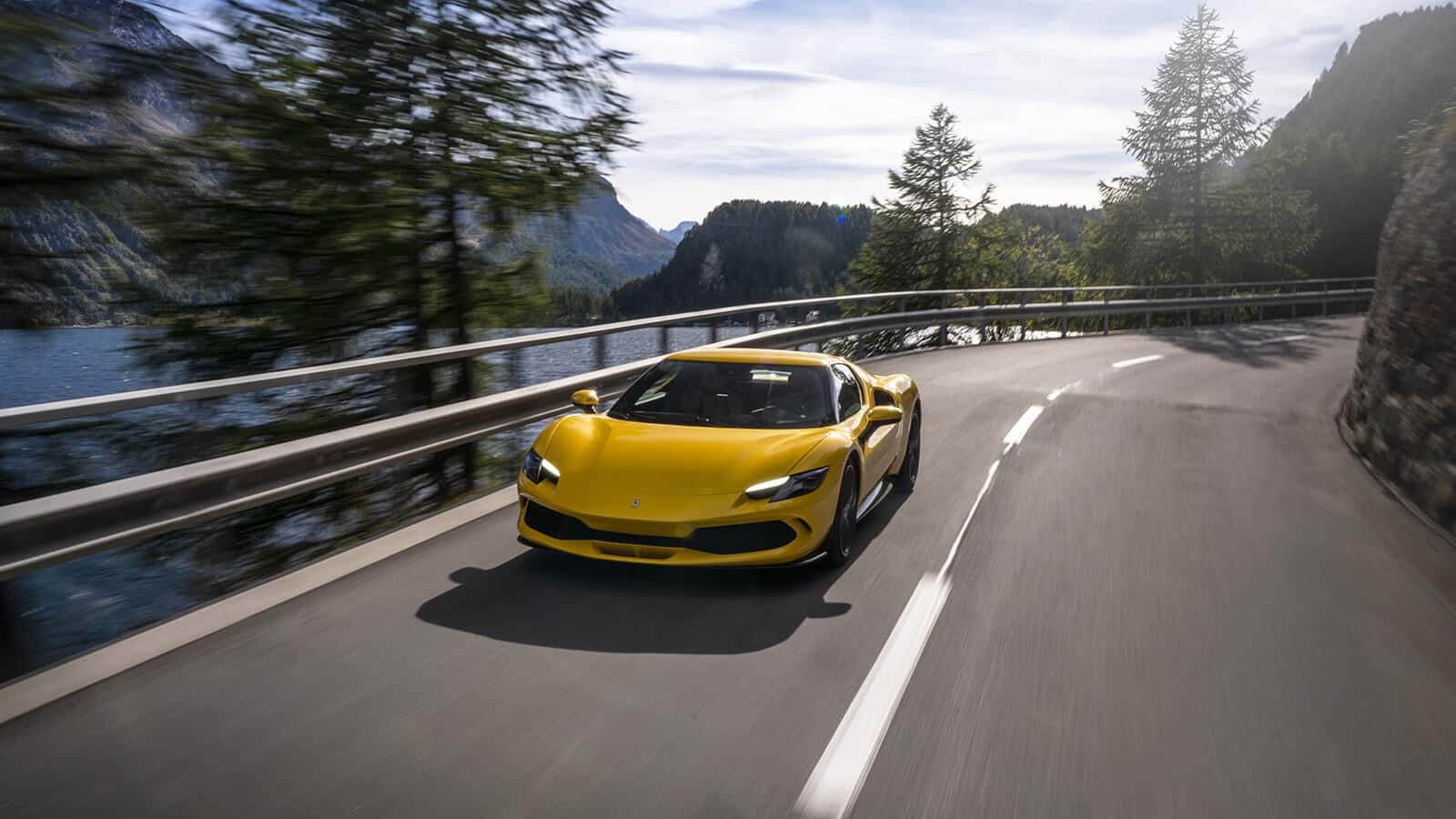
Hybrid technology has fundamentally changed how modern supercars are engineered, driven, and owned. What matters now is not whether a car uses electrification, but how intelligently it integrates it into the driving experience. The 2026 Ferrari 296 GTB and 2026 McLaren Artura sit at the center of this shift, representing two very different interpretations of performance in the hybrid era.
2026 Ferrari 296 GTB vs 2026 McLaren Artura: Hybrid Supercar Showdown
The hybrid supercar world has shifted from experimental territory into something far more serious. These aren’t green-washed compromises anymore. They’re legitimate performance machines that happen to plug in.
At our Ferrari Lake Forest facility, we see this transition play out daily. Customers walk in expecting traditional supercar drama but leave understanding these electrified beasts deliver something entirely different. The 2026 Ferrari 296 GTB and 2026 McLaren Artura showcase two completely different approaches to this challenge.
Ferrari doubles down on intensity. Every component exists to amplify the experience, from the shrieking twin-turbo V6 to the instant electric torque that eliminates any hint of lag. McLaren takes the analytical route, building everything around their carbon monocoque and obsessing over weight reduction. Both cars hit 60 mph in under three seconds and crack 200 mph, but the journey to those numbers feels worlds apart.
Raw specs don’t tell the whole story here. These machines reveal their true character through steering feel, throttle response, and how they communicate with the driver under pressure.
Powertrain and Hybrid Performance
The numbers show where each company places its engineering bets. After 44 years representing Ferrari, we’ve seen how these fundamental choices shape everything else about the driving experience.
|
Specification |
2026 Ferrari 296 GTB |
2026 McLaren Artura |
|
Horsepower |
819 hp (3.0L twin-turbo V6 + e-motor) |
690 hp (3.0L twin-turbo V6 + axial flux motor) |
|
0-60 mph |
2.9 sec |
3.0 sec |
|
Top Speed |
205+ mph |
205 mph |
|
EV Range |
7 miles |
11 miles |
That 129-horsepower gap isn’t just bragging rights. It translates into relentless acceleration that never seems to plateau. The Ferrari builds power like a crescendo, while the McLaren delivers its thrust more methodically. Both reach similar top speeds, but the Ferrari gets there with noticeably more aggression.
Ferrari 296 GTB Hybrid System
Ferrari’s hybrid strategy amplifies combustion drama rather than hiding it. The electric motor doesn’t just fill turbo lag, it extends the power delivery all the way to 8,500 rpm. This creates acceleration that feels both instant and building, which shouldn’t be possible but somehow works.
The brake-by-wire system actually feels natural, something that can’t be said for most hybrids. No weird pedal travel or dead spots. FDE torque vectoring adds another dimension, using selective braking to enhance downforce and cornering stability when you’re really pushing.
The eManettino dial cycles through Hybrid, Performance, Qualify, and eDrive modes. Each setting recalibrates everything: throttle response, suspension stiffness, electric assist timing. Seven miles of EV range sounds minimal until you realize it lets you cruise through residential neighborhoods without announcing your arrival to the entire block.
McLaren Artura Hybrid Architecture
McLaren built everything around their MCLA carbon monocoque. The goal wasn’t maximum power (though 690 combined horsepower isn’t modest), it was creating the lightest, stiffest foundation possible. The axial flux motor integrates seamlessly with the V6, feeding power through an eight-speed dual-clutch that responds instantly to paddle inputs.
This lighter overall package shows up in handling. Turn-in feels razor-sharp. Direction changes happen with minimal body movement. The trade-off? Absolute power trails the Ferrari by a margin you’ll notice on straightaways.
Eleven miles of EV range offers genuine emissions-free commuting capability. McLaren also includes driver aids like Adaptive Cruise Control and Automatic High Beam, features Ferrari deliberately omits. The result feels more approachable for drivers stepping up from conventional sports cars, though hardcore enthusiasts might miss Ferrari’s no-compromises intensity.
Exterior Design and Aerodynamic Philosophy
Ferrari shapes the 296 GTB with aggressive surface tension borrowed directly from their racing programs. Every curve serves dual purposes: visual impact and measurable aerodynamic benefit. The compact rear deck and integrated spoiler generate downforce without creating drag penalties. Vented fenders channel airflow to cool brakes and manage turbulence around the wheels.
McLaren takes the clinical approach. The Artura’s bodywork prioritizes airflow management over emotional appeal. Less theatrical? Absolutely. But it achieves similar downforce through careful underbody channeling and an active rear wing that deploys based on speed and downforce requirements.
Both philosophies work brilliantly on track. In our showroom, Ferrari’s design consistently generates stronger emotional responses from visitors.
Interior Craftsmanship and Technology
Cabin Materials and Build Quality
Slip into either cockpit and you’ll find serious attention to material quality, executed through completely different philosophies. Ferrari layers traditional Italian craftsmanship with modern technology. Extensive leather combinations and custom stitching patterns available through their personalization program. The seats balance long-distance comfort with serious lateral support, wrapped in hides that actually improve with age and use.
McLaren emphasizes functional minimalism. Alcantara, carbon fiber, and technical fabrics create a lighter, more purposeful environment. Both approaches deliver luxury, but Ferrari feels special-occasion while McLaren reads everyday-usable.
Infotainment and Driver Interface
Ferrari positions a portrait-oriented touchscreen toward the driver, supplemented by traditional toggle switches and the iconic manettino dial. The interface prioritizes driving information over entertainment features. Everything focuses on track-oriented data and performance metrics.
McLaren integrates a wider landscape screen with comprehensive connectivity, including Apple CarPlay and navigation that actually functions intuitively. The McLaren system feels more modern and user-friendly, though Ferrari owners often prefer the stripped-down approach that keeps attention focused on driving rather than screen interactions.
Driving Dynamics and Real-World Handling
Steering Feel and Chassis Response
Ferrari tunes the 296 GTB for precision and feedback that builds naturally with cornering loads. The RWD layout and rear weight bias create rotation characteristics that skilled drivers exploit for faster lap times, while FDE intervention catches slides before they become backwards journeys into barriers. This balance encourages aggressive inputs and rewards commitment through corners.
McLaren’s chassis responds with equal precision but less intimidation factor. More progressive breakaway characteristics make serious speed accessible to broader skill levels. The MCLA platform’s stiffness translates steering inputs directly into directional changes, though some drivers find it lacks the organic feel Ferrari cultivates through decades of chassis development experience.
Driving Modes and Daily Usability
Both supercars deliver surprising daily usability when driven in their comfort-oriented modes. Ferrari’s Hybrid setting softens suspension damping and lengthens gear ratios, transforming the 296 GTB into a civilized companion for errands around the Chicago area. The front axle lift system clears parking barriers and steep driveways without scraping the carbon splitter against concrete.
McLaren’s Urban mode relaxes throttle response and adjusts exhaust valve timing to minimize drone during stop-and-go traffic. Both cars prove you can own a 200-mph hybrid supercar without sacrificing everyday functionality, though neither matches a luxury sedan’s compliance over rough pavement or speed bumps.
Ownership Experience and Long-Term Value
Ferrari ownership extends beyond the vehicle into a community and support network built over decades. Our award-winning service center employs factory-trained technicians who maintain vehicles to exact Ferrari specifications, ensuring both performance and value preservation over time. The brand’s racing heritage creates emotional connections that transcend mechanical specifications, with owners actively participating in track events and social gatherings throughout the region.
McLaren offers similar community-building efforts but lacks Ferrari’s generational depth and proven resale value stability. Both brands depreciate slower than conventional supercars, though Ferrari’s stronger collector appeal typically translates into better long-term value retention numbers.
Our 70,000 square foot facility houses one of the largest indoor Ferrari displays in the country, providing context for how the 296 GTB fits within the marque’s modern lineup alongside rare classics that demonstrate lasting desirability across decades of ownership.
Which Hybrid Supercar Is Right for You?
The choice reflects personal priorities rather than objective superiority. Buyers seeking maximum performance, racing-derived technology, and emotional intensity gravitate toward the 296 GTB. That 129-horsepower advantage and track-focused tuning deliver thrills that justify the premium, especially for enthusiasts who value Ferrari’s heritage and community connections.
The McLaren Artura appeals to drivers prioritizing everyday usability, modern technology integration, and accessible handling limits.
Both represent pinnacle hybrid engineering executed through distinct philosophies. Neither choice disappoints, though the Ferrari typically creates stronger emotional bonds that transcend rational analysis and spec sheet comparisons.
Experience the 2026 Ferrari 296 GTB at Ferrari Lake Forest
Specifications and comparisons only reveal so much about these machines. The 296 GTB demands firsthand experience to fully understand how its hybrid system sharpens response, intensifies acceleration, and preserves the unmistakable character Ferrari is known for.
As a Factory Authorized Ferrari dealer since 1981, we provide factory-level expertise, award-winning service, and a buying experience tailored to serious enthusiasts. Contact our team to discuss current 296 GTB availability, schedule a private viewing, or visit our Lake Forest facility at 990 N Shore Dr, Lake Bluff to explore the model in person alongside one of the country’s most significant Ferrari collections.
Whether you are considering your first Ferrari or adding to an established collection, the right guidance makes all the difference. Ferrari Lake Forest is here to ensure your ownership experience matches the performance, precision, and legacy of the car itself.
Frequently Asked Questions
Which car is quicker: the 2026 Ferrari 296 GTB or 2026 McLaren Artura?
Both are extremely quick, with the Ferrari listed at 2.9 seconds to 60 mph and the McLaren at 3.0 seconds, though their power delivery feels very different on the road.
Does the McLaren Artura have more EV range than the Ferrari 296 GTB?
Yes. The figures shown list 11 miles of EV range for the Artura versus 7 miles for the 296 GTB, which can matter for short, quiet trips.
What’s the biggest difference in the driving experience between these hybrid supercars?
The 296 GTB emphasizes intensity and a building, dramatic surge, while the Artura prioritizes lightweight balance, precision, and a more approachable everyday character.
0 comment(s) so far on 2026 Ferrari 296 GTB vs 2026 McLaren Artura